

Field Observations
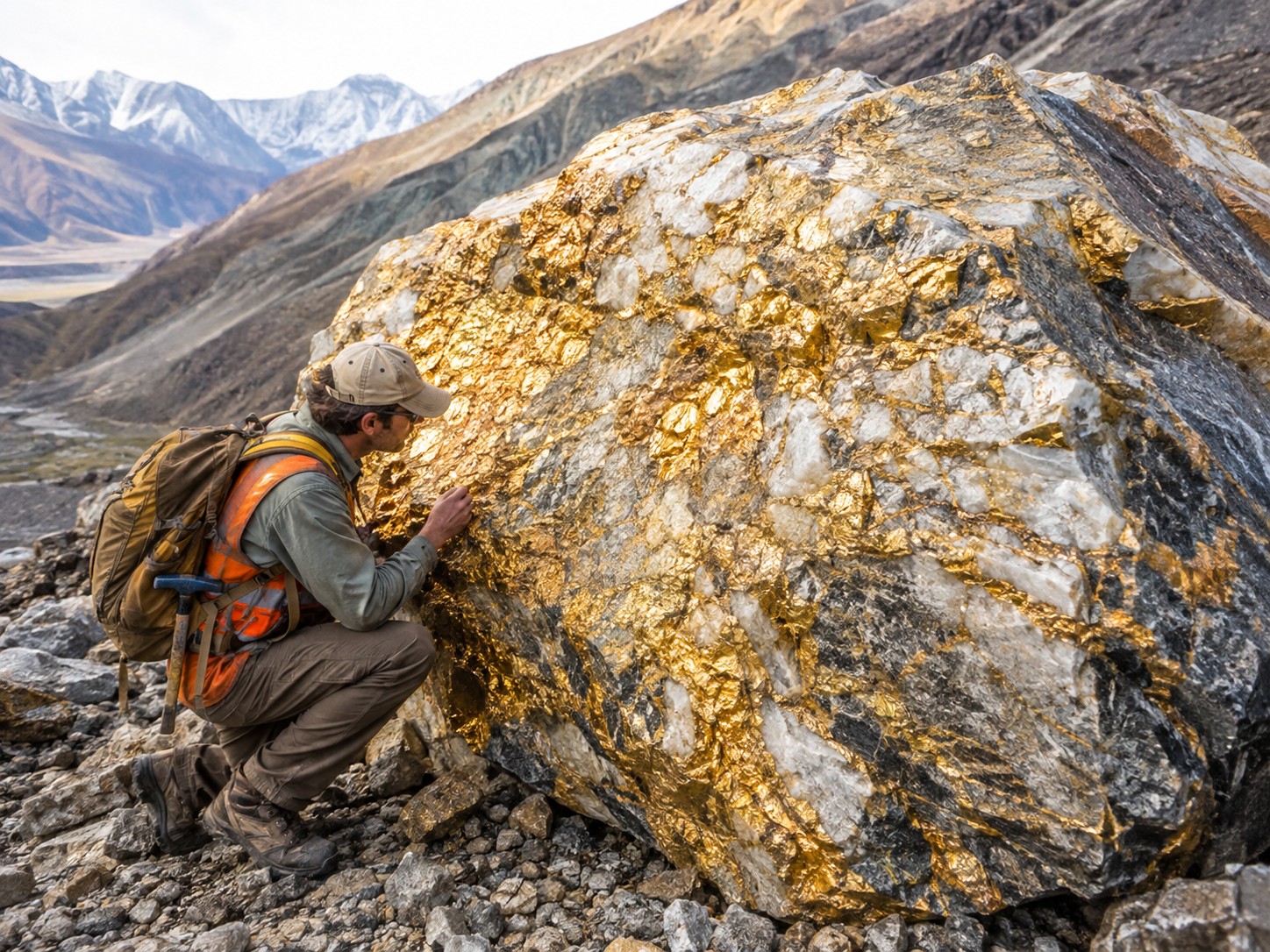
Today’s work focused on examining a large quartz-rich boulder located along the lower slope of the target area. The sample contains abundant bright metallic, gold-coloured mineralization distributed through fractured white quartz and darker host-rock material.
The metallic material occurs as irregular patches, fine fracture fillings and broader vein-like concentrations. Although its appearance is consistent with possible visible gold, field identification alone is not sufficient to confirm the mineral species. Laboratory assay and mineralogical analysis will be required.
The boulder is strongly fractured and appears to contain several generations of quartz veining. Darker sections of the rock may represent altered or partially included host rock. Oxidation and weathering are limited on the freshly exposed surfaces.
Work Completed Today
The field team:
- Photographed the boulder and surrounding exposure from multiple angles.
- Recorded the location using handheld GPS.
- Examined the mineralization using a hand lens.
- Completed preliminary geological mapping of the immediate area.
- Collected representative grab samples from the quartz-rich, metallic-rich and darker host-rock sections.
- Marked the sample locations and assigned sample identification numbers.
- Checked the surrounding slope for additional mineralized float and possible bedrock sources.
- Recorded structural measurements from visible fractures and vein orientations where possible.
Samples will be securely bagged, tagged and submitted under standard chain-of-custody procedures. Certified reference materials, blanks and duplicate samples will be included with the analytical batch.
Preliminary Interpretation
The size and intensity of the mineralized material make this occurrence a priority for follow-up. The boulder may have originated from a nearby mineralized vein or bedrock exposure upslope. Additional work is required to determine whether the sample is locally derived float or has been transported from farther away.
The immediate objective is to trace the mineralized material back toward its potential bedrock source and establish the orientation, width and continuity of the mineralized structure.
Planned Work for Next Week
Next week, the field team plans to:
- Conduct systematic prospecting upslope and along strike from the discovery location.
- Establish a tighter soil- and rock-sampling grid around the occurrence.
- Collect additional representative samples from mineralized float and exposed bedrock.
- Complete detailed geological and structural mapping.
- Use mechanical stripping or hand trenching, where permitted, to expose buried bedrock.
- Submit the initial samples for gold analysis and multi-element geochemistry.
- Review assay results as they become available and prioritize areas for additional trenching or geophysical follow-up.
Pending positive analytical results, the next phase may include expanded surface sampling, channel sampling across exposed veins and the identification of preliminary drill targets.